
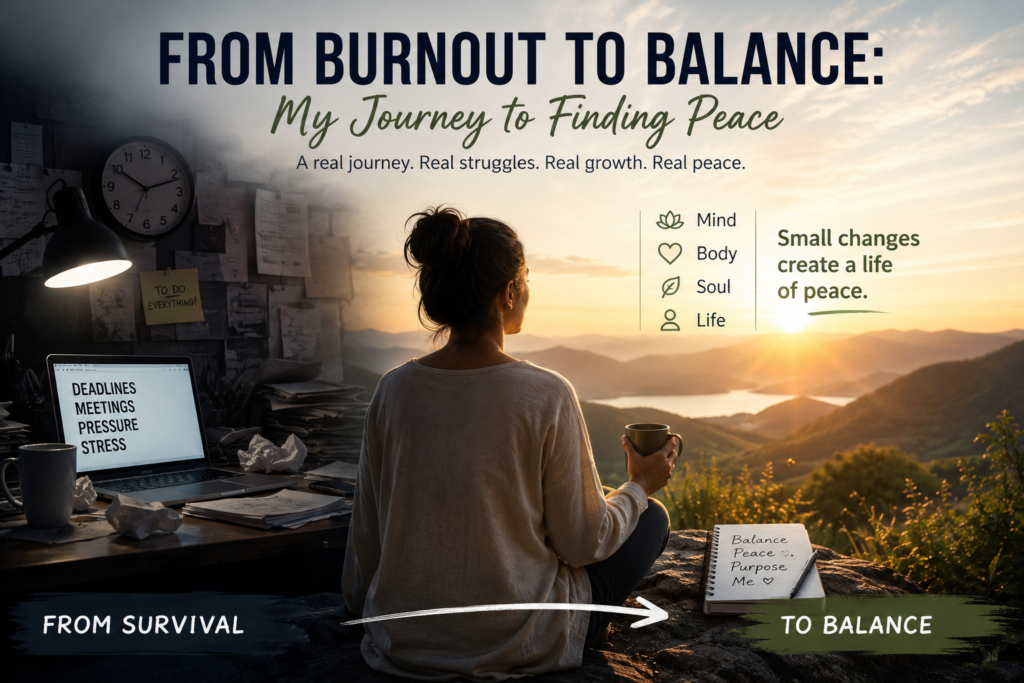
The Day Everything Finally Broke
The email arrived at 2:13 a.m.
My laptop screen glowed in the dark while the rest of the house slept peacefully. Empty coffee cups surrounded my desk like trophies from a battle nobody could see. My shoulders ached. A headache pulsed behind my eyes. Still, I kept typing.
One more task.
One more reply.
Another deadline.
I told myself this was what successful people did.
That night, my fingers froze above the keyboard. Tears filled my eyes for no clear reason. My chest tightened so hard it felt impossible to breathe properly. The room suddenly felt smaller.
At first, I thought it was stress.
Later, I realized it was burnout.
For months, I had ignored the warning signs. Sleep became shorter. Patience disappeared. Small problems felt massive. Even weekends stopped feeling restful.
Meanwhile, everyone around me believed I was doing great.
I smiled in meetings.
Friends called me hardworking.
Family praised my dedication.
Inside, however, I felt exhausted in a way sleep could not fix.
That moment changed everything.
Not overnight.
Not magically.
Yet it became the beginning of my journey from burnout to balance.
And honestly, I never expected peace to look so different from success.
What Burnout Really Feels Like
Most people imagine burnout as simple tiredness.
The truth is far deeper.
Physical exhaustion is only one piece of it. Emotional fatigue slowly enters every corner of life. Motivation fades. Joy disappears. Even small tasks begin to feel heavy.
I remember waking up every morning already drained.
Coffee stopped helping.
Music became noise.
Conversations felt like work.
Nothing seemed exciting anymore.
At the same time, I kept pushing harder because I believed slowing down meant failure.
That mindset nearly destroyed me.
According to the World Health Organization, burnout results from chronic workplace stress that has not been successfully managed. Yet burnout rarely stays only at work.
It follows you home.
Relationships suffer.
Mental clarity disappears.
Personal happiness fades quietly.
Many people searching for work life balance, mental peace, and stress management tips are experiencing this exact struggle without realizing it.
I was one of them.
The Dangerous Habit of Always Being Busy
Years earlier, I admired busy people.
Packed schedules looked impressive.
Late-night work sessions felt productive.
Constant hustle seemed inspiring.
Social media made it worse.
Everywhere I looked, people celebrated exhaustion like a badge of honor. Sleep became optional. Rest looked lazy. Slowing down felt embarrassing.
Soon, I built my entire identity around productivity.
If I rested, guilt appeared.
Whenever I took a break, anxiety followed.
My worth became connected to how much I accomplished.
That belief is incredibly dangerous.
Human beings are not machines.
Even machines overheat.
Still, many of us ignore our limits until our bodies force us to stop.
Mine certainly did.
The Morning That Changed My Perspective
One Sunday morning, I sat alone in silence.
No laptop, notifications.
And no deadlines.
Rain tapped softly against the window while I stared at my untouched breakfast. Something inside me felt empty.
Not sadness.
Not anger.
Just emptiness.
At that moment, I asked myself a question I had avoided for years:
“What am I actually chasing?”
The answer shocked me.
I wasn’t chasing happiness anymore.
I was chasing approval.
Success had become performance. Every achievement only created another expectation. Nothing ever felt enough.
That realization hurt deeply.
Still, it also created freedom.
Because once you understand what is breaking you, healing finally becomes possible.
Why Burnout Happens So Easily Today
Modern life rewards constant availability.
Phones never stop buzzing.
Work follows us home.
Social media creates endless comparison.
Many people feel pressured to succeed faster than ever before. As a result, rest often feels unproductive.
Unfortunately, the human mind was never designed for nonstop stimulation.
Our brains need silence.
Bodies need recovery.
Emotions need space.
Without those things, burnout becomes almost unavoidable.
Research around mental health awareness and stress recovery continues to show how chronic stress impacts sleep, memory, mood, and physical health.
Yet society still praises overworking.
That contradiction traps millions of people.
Including me.
My First Step Toward Healing
I expected recovery to involve massive life changes.
Instead, it started with one tiny decision.
I went for a walk without my phone.
That sounds simple.
For me, it felt impossible.
The first few minutes were uncomfortable. My mind raced through unfinished tasks. Anxiety whispered that I was wasting time.
Eventually, something unexpected happened.
I noticed the world again.
Birds.
Wind.
Children laughing nearby.
Sunlight between trees.
For the first time in months, my thoughts slowed down.
Peace did not arrive dramatically.
It arrived quietly.
That walk became part of my daily routine.
Soon, other small habits followed.
The Power of Slowing Down
Healing from burnout taught me something important:
Rest is productive.
At first, I resisted that idea completely.
Then I noticed something surprising.
When I slept properly, I thought more clearly.
Once I stopped multitasking constantly, my focus improved.
After creating healthier boundaries, my energy returned slowly.
Balance did not reduce my productivity.
It improved it.
That realization changed my life.
Many people searching for self care habits, healthy lifestyle tips, and daily routines for mental health believe balance means becoming less ambitious.
Actually, true balance protects ambition from becoming self-destruction.
Learning to Say No
Before burnout, I said yes to almost everything.
Extra projects.
Late-night calls.
Weekend work.
Social obligations.
Helping others even when I felt empty.
Part of me feared disappointing people.
Another part feared missing opportunities.
Eventually, I realized every yes costs something.
Time.
Energy.
Attention.
Peace.
Saying no felt uncomfortable initially.
Guilt appeared immediately.
Over time, however, boundaries became one of the healthiest changes in my life.
Protecting your energy is not selfish.
It is necessary.
The Hidden Cost of Ignoring Mental Health
Burnout affects more than emotions.
My physical health suffered too.
Frequent headaches became normal.
Sleep quality collapsed.
Energy disappeared by afternoon.
Even my immune system weakened.
Stress quietly impacts the entire body.
Sadly, many people ignore symptoms because they seem “normal” in busy lifestyles.
That normalization is dangerous.
Mental wellness and physical wellness are deeply connected.
Once I started prioritizing recovery, my body slowly responded.
Sleep improved first.
Mood followed later.
Peace returned gradually.
Healing was not instant.
Still, every small step mattered.
Rediscovering Joy in Simple Things
During burnout, life became survival.
I stopped enjoying ordinary moments.
Food became fuel.
Weekends became catch-up time.
Hobbies disappeared completely.
One evening, I decided to cook dinner slowly instead of rushing through it. Music played softly in the background while vegetables sizzled in the pan.
Nothing extraordinary happened.
Yet I felt calm.
That feeling mattered.
Soon, I started reconnecting with forgotten parts of myself.
Reading books again.
Watching sunsets.
Calling friends without multitasking.
Sitting quietly without guilt.
Peace often hides inside simple moments we rush past every day.
Social Media and the Illusion of Perfect Lives
One major source of stress surprised me.
Social media.
Scrolling endlessly made me feel behind constantly. Someone always seemed more successful, healthier, richer, or happier.
Comparison became automatic.
Eventually, I reduced my screen time dramatically.
That single change improved my mental clarity almost immediately.
The truth is simple:
Most people share highlights, not reality.
Behind polished photos, many individuals struggle silently with anxiety, exhaustion, and burnout too.
Real life is slower than social media.
And honestly, that is a good thing.
Building a Balanced Daily Routine
Recovery required structure.
Not extreme discipline.
Gentle consistency.
I started creating routines that supported peace instead of pressure.
Mornings became calmer.
Nights became quieter.
Work gained clearer boundaries.
Here are habits that helped me most:
Prioritizing Sleep
Sleep became non-negotiable.
Everything improved when I rested properly.
Taking Daily Walks
Fresh air reduced stress more than I expected.
Movement helped clear mental clutter.
Creating Tech-Free Time
Silence allowed my mind to recover.
Constant stimulation had been exhausting me.
Practicing Gratitude
Small moments became easier to appreciate.
My focus shifted from pressure toward presence.
Protecting Personal Time
Not every hour needed productivity.
Rest deserved space too.
These habits sound simple because they are.
Simple habits change lives when repeated consistently.
Understanding That Peace Looks Different for Everyone
One mistake many people make is copying someone else’s version of balance.
Some people find peace in nature.
Others find it through faith, creativity, family, or solitude.
My journey taught me balance is personal.
For me, peace meant slower mornings.
It meant fewer commitments.
It meant working with purpose instead of constant pressure.
Your version may look completely different.
That is okay.
The goal is not perfection.
The goal is sustainability.
What I Lost And What I Gained
Burnout took a lot from me.
Time.
Energy.
Confidence.
Moments I can never fully recover.
Still, the experience also taught lessons I desperately needed.
I learned success without health is empty.
Achievement means little when peace disappears.
External validation cannot replace inner calm.
Most importantly, I discovered that slowing down does not ruin your future.
Sometimes it saves it.
Today, I still work hard.
I still chase goals.
The difference is this:
My life no longer revolves around exhaustion.
Balance became the foundation instead of the reward.
Signs You May Be Experiencing Burnout
Many people ignore burnout until it becomes severe.
Here are some common warning signs:
- Constant exhaustion even after resting
- Feeling emotionally numb
- Increased irritability
- Difficulty focusing
- Lack of motivation
- Frequent headaches or tension
- Trouble sleeping
- Anxiety about work constantly
- Feeling disconnected from life
- Losing interest in things once enjoyed
Recognizing these signs early matters greatly.
Healing becomes easier when burnout is addressed sooner.
The Truth About Finding Peace
Peace is not a perfect life.
Problems still exist.
Stress still appears.
Difficult days still happen.
The difference is how you respond to them.
Before burnout, my mind never stopped racing.
Now, I understand the value of pause.
I understand the importance of breathing room.
I understand that rest creates strength instead of weakness.
That shift changed everything.
Conclusion
Looking back, burnout did not happen in one dramatic moment.
It built slowly through ignored stress, endless pressure, and the belief that my worth depended on constant productivity.
Recovery happened slowly too.
One boundary.
One walk.
One quiet morning at a time.
Today, balance does not mean my life is perfect. Challenges still appear. Responsibilities still exist. Hard days still come and go.
Yet peace finally has a place in my life again.
And honestly, that matters more than endless hustle ever did.
So here’s the question:
Have you been chasing success so hard that you forgot how to feel at peace?