
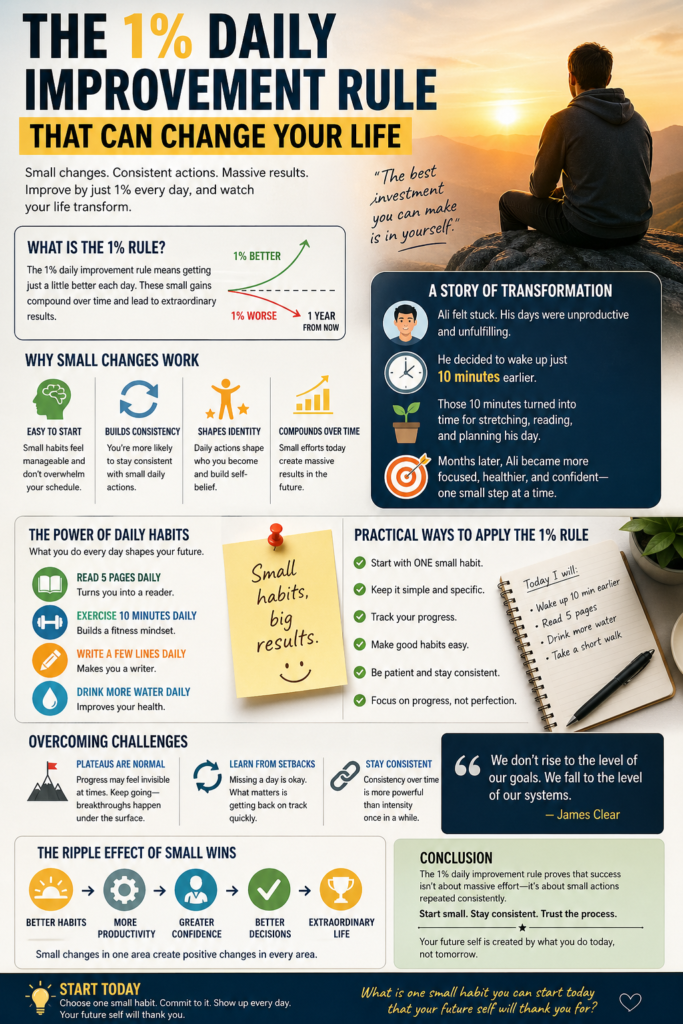
Change rarely arrives in dramatic, movie like moments. More often, it shows up quietly through small choices, repeated daily. The idea of improving just 1% every day may sound almost too simple, even insignificant at first. Yet over time, this tiny shift compounds into something powerful enough to reshape your entire life.
Let’s explore how.
A Small Beginning That Didn’t Feel Like Much
A few years ago, Ali felt stuck. His routine looked the same every day wake up late, scroll endlessly, rush through work, and sleep feeling unfulfilled. He often dreamed of success, discipline, and growth, but those dreams felt distant.
One day, instead of trying to “fix everything,” he made a smaller decision.
He chose to wake up just 10 minutes earlier.
That was it.
At first, nothing seemed different. However, those 10 minutes slowly turned into time for stretching. Then reading. Eventually, planning his day. Within months, his mornings transformed and so did his mindset.
Ali didn’t overhaul his life overnight. Instead, he followed one simple principle: improve just a little every day.
What Is the 1% Daily Improvement Rule?
The 1% daily improvement rule is based on a powerful concept: small, consistent progress leads to massive long-term results. When you improve by just 1% each day, those gains compound over time.
Think of it like this: if you get 1% better every day for a year, you won’t just be slightly improved you’ll be dramatically transformed.
On the other hand, neglecting growth even by 1% daily can lead to decline.
Therefore, the real power lies not in intensity, but in consistency.
Why Small Changes Work Better Than Big Plans
Many people fail in self improvement because they aim too high too quickly. They set unrealistic goals, burn out, and eventually give up.
In contrast, small daily habits feel manageable. They don’t trigger resistance. They don’t overwhelm your schedule.
As a result, you’re more likely to stay consistent.
Moreover, consistency builds identity. When you show up every day even in small ways you start to see yourself differently. You become someone who keeps promises, someone who grows.
That shift alone can change everything.
The Hidden Power of Daily Habits
Daily habits shape your life more than occasional effort ever will. What you do repeatedly becomes who you are.
For example:
- Reading 5 pages daily turns you into a reader.
- Exercising 10 minutes a day builds a fitness mindset.
- Writing a few lines consistently makes you a writer.
Initially, these actions seem minor. However, over weeks and months, they stack into meaningful progress.
That’s the beauty of habits—they work silently in the background.
Compounding: The Secret Behind Real Growth
Growth isn’t always visible in the beginning. In fact, it often feels slow and unrewarding.
Yet beneath the surface, something important is happening.
Each small effort builds upon the last. Over time, these efforts multiply, not just add up.
This is called compounding.
Just like money grows with interest, your skills, mindset, and discipline grow with repeated effort. Eventually, the results become impossible to ignore.
Breaking the Myth of Motivation
Many people believe they need motivation to improve. However, motivation is unreliable. It comes and goes, depending on mood and circumstances.
Instead, focus on building systems.
For instance, instead of saying, “I’ll exercise when I feel motivated,” decide, “I’ll exercise for 5 minutes every day.”
This shift removes decision fatigue. It also makes your actions automatic.
Over time, discipline replaces motivation, discipline is far more dependable.
The Role of Identity in Self Improvement
True change happens when your habits align with your identity.
Rather than chasing outcomes, focus on becoming the type of person who naturally achieves those outcomes.
For example:
- Instead of aiming to “lose weight,” become someone who prioritizes health.
- Instead of trying to “read more,” become someone who values learning.
Each small action then becomes a vote for your new identity.
Eventually, your behavior and identity align, making growth feel natural rather than forced.
Overcoming the Plateau Phase
At some point, progress may feel invisible. This stage is often called the plateau.
During this phase, many people quit because they don’t see immediate results.
However, this is where most of the transformation is happening.
Think of it like ice warming from -5°C to 0°C. Nothing seems to change, until suddenly, it melts.
Similarly, your efforts are building beneath the surface. Keep going, even when results aren’t obvious.
Practical Ways to Apply the 1% Rule
Starting doesn’t require a perfect plan. Instead, focus on simple, actionable steps.
Begin with one habit:
- Wake up 10 minutes earlier
- Drink more water daily
- Read for 5 minutes
- Take a short walk
Once that habit becomes consistent, add another.
Gradually, your routine will evolve without feeling overwhelming.
Additionally, track your progress. Seeing small wins can boost motivation and reinforce consistency.
The Importance of Environment
Your environment plays a major role in shaping your behavior.
If you want to improve your daily habits, design your surroundings to support them.
For example:
- Keep books within reach if you want to read more
- Prepare workout clothes in advance
- Remove distractions from your workspace
By making good habits easier and bad habits harder, you reduce the need for willpower.
Learning from Setbacks
No journey is perfect. There will be days when you miss your habits or lose focus.
That’s normal.
What matters is how quickly you return.
Instead of aiming for perfection, aim for consistency over time. Missing one day doesn’t ruin your progress but quitting entirely does.
Therefore, treat setbacks as part of the process, not as failure.
The Ripple Effect of Small Wins
Small improvements don’t just stay in one area they spread.
For instance, improving your morning routine can boost productivity. Increased productivity can improve confidence. Confidence can lead to better decisions.
Over time, these positive effects compound across different areas of life.
That’s how a simple habit can create a chain reaction of growth.
A Story of Transformation
Let’s return to Ali.
Months after his small change, his life looked completely different. He was more focused, healthier, and confident. His work improved, and his relationships became stronger.
Interestingly, none of this came from a single big decision.
It came from tiny, consistent improvements.
Each day, he chose to be just a little better than yesterday.
And that made all the difference.
Why This Approach Works for Everyone
The 1% rule doesn’t depend on talent, luck, or resources. It relies on consistency and patience qualities anyone can develop.
Moreover, it adapts to your lifestyle. You don’t need hours of free time. You just need intention.
Because of that, it’s one of the most practical and sustainable approaches to self improvement.
Turning Knowledge into Action
Understanding the concept isn’t enough. Real change begins when you apply it.
Start today.
Choose one small habit. Commit to it. Keep it simple and achievable.
Then show up every day.
Even when you don’t feel like it.
Especially when you don’t feel like it.
Conclusion
The 1% daily improvement rule proves that success isn’t built on massive effort it’s built on consistent, small actions repeated over time. While the changes may feel slow at first, they eventually compound into something extraordinary.
Your daily habits shape your future. Each small choice either moves you forward or keeps you stuck.
So instead of waiting for the perfect moment, start small. Stay consistent. Trust the process.
Because in the end, it’s not about changing your life overnight it’s about changing it one day at a time.
Now here’s something to think about:
What is one small habit you can start today that your future self will thank you for?